Join a molecular nutrition course you can study flexibly, 100% online.
Develop your understanding of the molecular landscape of nutrition, and the interaction between nutrients and our bodies.
In this Masters-level online short course, you’ll learn from a team of academics and scientists at the forefront of molecular nutrition research.
With their expert guidance, you will:
- gain a theoretical understanding of the links between diet-related diseases and molecular-signalling responses to dietary metabolites
- investigate the mechanisms involved in dietary responses at the molecular level in cells, tissue, organ and whole-body systems, including the gut microbiota
- find out how data science can be used to uncover molecular interactions with nutrients within our bodies.
Who can join this online molecular nutrition course?
This distance-learning course is designed for graduates and professionals with a background in Biomedical or Life Sciences.
The course is also ideally suited to:
- those interested in studying nutrition at Masters level
- public health or food science students
- health and nutrition professionals.
Build credits towards a Masters degree
This short course is part of online:
You can use the credits you earn with this course towards this Masters qualification.
What you’ll study
In this course, you’ll study the latest biological and molecular science research methods used to understand the role food and nutrients play in human health and disease.
You’ll cover the following topics:
- molecular approaches to nutrition
- cellular signalling mechanisms at a molecular level
- gut microbiome, diet and health
- molecular nutrition and health/disease
- nutrigenomics and society
- bioethics
You’ll contribute to lively discussions about the application of research methods, study and intervention design.
By the end of this molecular nutrition course, you’ll be able to...
-
Examine the role of molecular nutrition in health and disease.
-
Describe model systems used in molecular approaches within nutrition research.
-
Discuss cellular signalling mechanisms at a molecular level.
-
Debate bioethical considerations for nutrigenomics and society.
-
Define nutrigenomics and discuss application of techniques to nutrigenomics research.
-
Further develop your knowledge of molecular biology and molecular approaches to nutrition.
Learn with the Rowett Institute
For over 100 years, the Rowett has played a major role in informing UK government health policy and establishing the link between diet and health.
How you’ll study
Online learning
This distance learning molecular nutrition course is delivered flexibly, 100% online.
You can learn with us anywhere in the world, no student visa required, and manage your study hours to suit you.
Your teaching
This course is taught at Masters level.
Teaching is delivered through MyAberdeen, our online Virtual Learning Environment (VLE). It holds all the materials, tools and support you’ll need in your studies. Take a look around MyAberdeen.
You can access your learning materials on computer, smartphone and laptop, 24 hours a day. You’ll find a range of resources available, including:
- video lectures
- live online tutorial sessions
- discussion boards with classmates and tutors
- the online resources of our award-winning Sir Duncan Rice Library.
Live online tutorials
This course features a series of seven live online tutorials where you can interact with your tutors and ask questions.
You do not have to attend these live, and they’ll be recorded so that you can view them at any time.
Your tutors
This course is delivered by the Rowett Institute, which is part of our School of Medicine, Medical Sciences and Nutrition.
You’ll learn from a team of academics and scientists at the forefront of molecular nutrition studies, publishing research into gut health, metabolism and obesity.
You’ll be assessed entirely online via:
- a practical report (worth 50% of your final grade)
- an online test (50%).
Your assessments provide practical experience manipulating medium-sized data-sets using coding interfaces in order to process ‘omics’ data.
Your assignments will help you develop analytical skills and apply problem-solving approaches to study molecular mechanisms linking diet and disease risk and prevention.
Live online tutorials
This course features live online tutorials.
These are scheduled to last for around one hour.
Tutorial times will be organised at the start of the course.
Live attendance is encouraged, but not mandatory. Tutorials will be recorded for you to view anytime if you’re unable to attend live.
Study hours
The course totals approximately 150 hours of study and assessment time. That’s around 10 – 15 hours per week.
This is an indicative guide to the time required for a typical student at this level to achieve the learning outcomes.
This includes time for independent study, as well as teaching and assessments.
You can largely set your own study hours each week to cover the materials. MyAberdeen is available 24/7, so you can log in and study when it suits you.
Activities at fixed times
There will be some activities scheduled at fixed times, such as meetings with your tutor or assessments with deadlines. But otherwise, you can access and work through your course at your convenience.
Our first-class support structure will ensure that you aren’t alone in your studies. You’ll have contact with your coordinator via email, MyAberdeen and Microsoft Teams. You can use social media and discussion boards to chat with your fellow students too.
We provide a wide range of services to support you in your studies and beyond:
- Careers and Employability Service
- Disability support
- IT support
- Library support
- Student Support Service – help with finances, wellbeing, and non-academic issues
- Student Learning Service – study skills support and advice
- Aberdeen University Students’ Association (AUSA) – run by students for students
- Toolkit – clever apps and free training that can make your study life easier
Wherever you are in the world, you’ll feel part of our very special Aberdeen learning community.
Your course coordinator
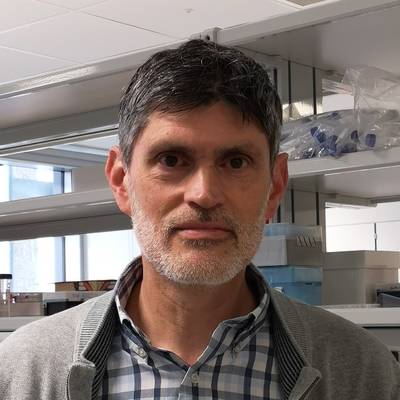
Dr Antonio Gonzalez Sanchez
Antonio is a Lecturer at the Rowett Institute.
He is a neuroscientist with an interest in understanding the role of the brain in regulating food intake and metabolism.
Antonio’s research focuses on studying brain cells that detect nutrients, how they regulate appetite, and how metabolic disease may result from dysfunctional activity in these groups of brain cells.
View Antonio’s profileWhere this will take you
Towards a Masters
You’ll earn 15 credits at Masters level (SCQF Level 11) on successful completion of this course. You can use these credits towards our:

Masters in Clinical Nutrition
Join an online Nutrition degree accredited by the Association for Nutrition. Study the link between diet and health, and how issues of over and undernutrition affect populations today. 10% discount for NHS staff.
View MSc Clinical Nutrition
Masters in Applied Health Sciences
Fast-track your career in healthcare with our uniquely flexible MSc Applied Health Sciences. Study 100% online or combine with on-campus courses at our Foresterhill Health Campus. 10% discount for NHS staff.
View MSc Applied Health SciencesBuild your learning with more short courses
We have a range of online nutrition and healthcare courses you can use to build your skills.
Many carry credits you can build up into postgraduate qualifications, including Masters degrees:
Careers
The course provides a career development route for health professionals and those working in industry or government agencies.
If you’re a scientist or graduate keen to move into the nutrition field, this is a step towards a career in this area.
Continuing Professional Development (CPD)
Your employer or professional institute may recognise this course for CPD hours. Talk to your employer or institute to find out more.

Free career support
Access our free careers service while you study.
- 1:1 appointments
- CV checks
- Interview prep
- Job opportunities
Entry requirements
Entry requirements
We welcome students from all over the world.
This course has no formal entry requirements. You do not need to provide proof of your qualifications.
But you do need to check the entry guidance above to understand the level of teaching delivered, to decide if this course is right for you.
If you do not have qualifications from the UK, check the equivalent teaching level for your country.
Visa requirements
You do not need a student visa to study online with us.
English language requirements
Teaching is delivered in English.
You do not have to provide proof of your English language skills to join this course. But we want to make sure that you can use English well enough to study successfully.
Recommended level of English
This course uses our Postgraduate Higher level of English language proficiency.
These are our Postgraduate Higher requirements, and these are minimum scores.
IELTS Academic, IELTS UKVI Academic, or IELTS Online (not IELTS Indicator or IELTS General Training)
- 6.5 overall
- 5.5 for listening and speaking
- 6.0 for reading and writing
TOEFL iBT or TOEFL iBT Home Edition
- 90 overall
- 17 for listening
- 21 for reading
- 20 for speaking
- 21 for writing
- TOEFL DI code is 0818
Cambridge English: B2 First, C1 Advanced, or C2 Proficiency
- 176 overall
- 162 for listening and speaking
- 169 for reading and writing
LanguageCert Academic / LanguageCert Academic SELT
- 70 overall
- 60 for listening and speaking
- 65 for reading and writing
Oxford ELLT Digital – English Language Level Test Online
- 7.0 overall
- 5.0 for listening and speaking
- 6.0 for reading and writing
PTE Academic (online test not accepted)
- 62 overall
- 59 for listening, reading, speaking and writing
Skills for English: SELT
- B2 pass with merit
Duolingo – tests taken from 1 July 2024 onward
- 120 overall
- 95 for listening and speaking
- 105 for reading and writing
University of Aberdeen English Pre-sessional Programme (PSE)
- Pass
- Valid for one year. Refresher can be offered if out of date
Pre-sessional academic English preparation programmes undertaken at other UK universities
- Pass at an equivalent of 6.5 (C1)
- B2 in all four skills
- Certification must be within one year prior to the start of your course
For more information about language qualifications see our English Language Requirements page.
You will need access to:
A computer (PC, laptop or Mac) with an up-to-date operating system
Most teaching materials are smartphone- and tablet-friendly. But we recommend a proper laptop or desktop for completing assignments comfortably.
Reliable internet access
We recommend:
- a wired connection
- a minimum download speed of 2 Mbps so you can take part fully in live sessions.
Speakers or headphones
- We recommend a headset with built-in microphone and earphones if you’re likely to study in an environment with background noise.
- A webcam is optional, but you may like to use one for some interactive sessions.
Software
We’ll give you access to Office365 applications. This means you can use online versions of Microsoft Word, Excel, PowerPoint and OneDrive and install these programs on up to five personal devices.
If your course requires specialist software, we’ll provide you with access to this and a licence that lasts throughout your studies.
See our detailed IT requirements for more information.
When you study with us, you can expect a first-class support structure so that you’re never alone in your studies.
But learning online does mean you have to motivate yourself and manage your own time.
Your most important commitment will be time – the time to work through, reflect on and understand your teaching materials.
Before you start a course that involves a high degree of independent study, we recommend looking at the time you will be able to devote to your studies each week:
- Be realistic
- Create a weekly schedule as a guide
If you have any questions about studying online, get in touch with our friendly team. We’re here to help.
Fee payment
Your course fee needs to be paid in full before you start your course.
We accept payment via Visa Debit, Visa Credit and Mastercard.
Ways to save
You may be able to get help funding this course via:
- discounts – if any discounts are available for this course, they’ll appear in the section below
- employer sponsorship – we accept full and partial fee payments from sponsors.
Find out more about funding options.
Student card
All our students are entitled to a University of Aberdeen student card. This gives you access to a range of student discounts around the city and online.
Learning resources
Access to all the essential books and resources you need are included in your tuition fee. They’ll be made available to you online and you do not have to buy your own copies.
We also provide optional recommended reading lists. Many of these resources are available electronically through our library, although purchases may be required if you wish to read the full list.
Printing
You may want to set aside a small budget for printing, depending on how you like to work.
This course has no formal entry requirements. You decide if it’s suitable for you.
The course is delivered at Masters level. At this level, for this course, you’d usually have at least:
- a 2:2 UK undergraduate degree (or equivalent) in Biological Sciences or Life Sciences, or
- relevant experience that supports this level of study.