Join a water management course you can study flexibly online.
Water is one of the world’s most essential natural resources, yet it remains one of the most undervalued and undermanaged.
Join us online to develop practical skills to assess, allocate, and manage water resources sustainably.
Integrated water resources management (IWRM)
IWRM is a holistic approach to managing water resources. It considers all aspects of water resources, including quantity and quality, ecosystem health, and social and economic factors.
IWRM is a complex challenge, but it is essential for achieving sustainable water management.
This course will introduce you to the principles of IWRM and provide you with the tools and knowledge you need to start implementing it.
Take an integrated approach to water management
You’ll develop an integrated understanding of how water resources are assessed, allocated, and managed within complex, interconnected systems.
Exploring hydrology, water demand, environmental requirements, infrastructure, reservoir operation, governance, and climate challenges, you’ll learn how technical evidence can support practical water-management decisions.
Build practical, technical expertise
Through hands-on learning, you’ll work with real data and develop practical modelling, analysis, collaboration, and decision-making skills valued across sectors.
Study with active researchers
Teaching is delivered by academics and researchers specialising in hydrology, water resources management, climate adaptation, and environmental modelling.
Industry input
Industry perspectives are incorporated through guest lectures, including insights from Scottish Water and water-sector practitioners.
Who can join this water resources management course?
This distance-learning course is designed for graduates and professionals seeking a practical understanding of water resources planning and management.
The course is particularly relevant if you work in, or wish to move into:
- hydrology
- water resources management
- environmental management
- civil and environmental engineering
- geography
- sustainability
- climate adaptation
- catchment management
- public policy
- environmental consultancy.
The course is also suitable for professionals employed by water utilities, environmental regulators, government agencies, consultancies, non-governmental organisations (NGOs), and river-basin management bodies.
Previous experience of water resources modelling is not required, although you should be comfortable working with numerical information and spreadsheet software.

Build credits towards a Masters degree
This online course is part of:
You can use the credits you earn with this short course towards this MSc qualification.
What you’ll study
In this course, you’ll study the principles and practical application of integrated water resources management (IWRM).
You’ll examine how water availability, demand, infrastructure, environmental requirements, and governance interact within catchment systems.
You’ll cover topics including:
Introduction to IWRM
- Water as a natural resource
- Water Resources Management practices
- IWRM approaches, planning, and implementation
Water resources evaluation
- Identification and characterisation of surface and groundwater bodies
- Water resources quantification
- Alternative water resources, including desalination and reutilisation
- Hydrological models, hydrological data analysis, and rainfall–runoff modelling
Water uses, demands, and pressures
- Estimation of domestic, industrial, and agricultural water demands
- Irrigation water requirements using FAO-56 crop evapotranspiration methods
- Other water uses
- Environmental flow assessment using hydrological indicators
Water allocation and systems operation
- Relation between resource and demand
- Competing water uses, allocation priorities, and water-sharing trade-offs
- Evaluation of water-resource systems using reliability, resilience, and vulnerability metrics
- Reservoir design
- Water resource allocation models
- Operation rules in multi-reservoir systems
- Institutional arrangements, stakeholder participation, and water governance
- The use of serious games to explore negotiation and decision-making in water management
Hydro-climatic risks and climate change
- The effects of climate variability and climate change on water availability and demand
- Floods
- Droughts and water scarcity
- Climate scenarios
- Mitigation and adaptation planning, uncertainty, and scenario analysis
Social and economic factors
- Water footprint
- Water accountancy
- The price of water
- Operational perspectives from the water industry, including a guest contribution from Scottish Water.
Practical skills training
Through computer practicals, you’ll also gain experience using Microsoft Excel and specialist water resources systems-analysis software to build, run, and interpret hydrological and water-allocation models.
By the end of this water management course, you’ll be able to...
-
Contextualise the sustainable management of water resources within the wider aims of integrated water resources management.
-
Evaluate the complex socio-cultural, geo-political, and socio-economic factors affecting management of catchments and water resources.
-
Assess the balance between water resources availability and water resources demand in complex catchments with multiple competing water uses and users, considering environmental limitations.
-
Critically evaluate existing plans and processes for water resources management and water pollution prevention and control, formulating and assessing mitigation and/or adaptation measures.
-
Understand the potential conflicts that arise from trying to meet economic, social, and environmental objectives, and how tools such as integrated water resources planning and management can contribute to resolving these conflicts.
Choose the University of Aberdeen for online water management courses

Over 530 years of excellence
Study with the fifth-oldest university in the English-speaking world, founded in 1495.

Flexible
Flexible hours and 24/7 access, so you can study when it suits you.

20% alumni discount
University of Aberdeen alumni get 20% off fees for this online course.
How you’ll study
Online learning
This distance-learning Integrated Water Resources Management course is delivered 100% online.
You can learn with us anywhere, no student visa required, and manage your study hours to suit you.
Your teaching
This course is delivered at Masters level.
Teaching is delivered through MyAberdeen, our online Virtual Learning Environment (VLE). It holds all the materials, tools, and support you’ll need in your studies. Take a look around MyAberdeen.
You can access your learning materials on computer, smartphone, and laptop, 24 hours a day. You’ll find a range of resources available, including:
- pre-recorded video lectures
- live guest lectures
- live online tutorials
- a role-play simulation
- computer practicals
- a group project
- reading materials
- discussion boards with tutors and fellow students
- the online resources of our award-winning Sir Duncan Rice Library.
Live online tutorials
You’ll have three live tutorials with your tutors on Microsoft Teams. Here you can ask questions, discuss course materials, clarify assessment requirements, and get support with any issues you might have.
Attendance at live tutorials is encouraged but not mandatory, and tutorials will be recorded for you to watch at your convenience.
Guest lectures
Guest lectures will be delivered by experts from different sectors involved in IWRM, such as water supply, nature conservation, or catchment management. They’ll give you deeper IWRM insights from their particular sector.
These lectures will take place live online. Attendance is not mandatory, as they may take place at times that are not suitable for all.
Guest lectures will not normally be recorded due to potential restrictions relating to speaker permissions, intellectual property, and the inclusion of commercially or professionally sensitive material.
Role-play simulation
You’ll take part in a role-play simulation, exploring some of the social processes that, together with technical knowledge, determine decision-making for water resources management.
Computer practicals
Computer practicals will introduce you to various modelling tools to simulate water resources management, define and test scenarios, and carry out supply deficit risk analysis.
Group project
You’ll also carry out a group project where you’ll develop a water resources management plan using all the concepts dealt with during the lectures.
Your tutors
This course is delivered by the School of Geosciences.
You’ll learn from academics and active researchers with expertise in hydrology, water resources management, water security, climate adaptation, and environmental modelling.
You’ll also learn from invited guest lecturers, giving you a combination of academic, research, and real-world water-management perspectives.
The course is assessed online.
There are no in-person or online examinations, allowing you to demonstrate your learning through practical coursework.
You’ll be assessed via two pieces of coursework:
Flow to decision: Lab logbook and insights brief
An individual assessment based on the computer practicals. You’ll document methods, calculations, modelling decisions and results in a logbook, before producing a decision-focused insights brief evaluating water-management options, uncertainties, and trade-offs – worth 60% of your final course grade.
Catchment spotlight: IWRM on one sheet & lightning talk
A paired assessment involving the investigation of a catchment of your choice. You’ll create an A0 poster and deliver a short presentation on its principal IWRM characteristics and challenges, followed by questions – worth 40%.
Live online tutorials
This course features three online tutorials. Each tutorial is live and scheduled to last for around one hour.
Tutorial dates and times will be organised at the start of the course. Your course coordinator will consider everyone’s circumstances and time zones before setting up live tutorial times that best suit the class.
Live attendance is encouraged but not essential. The tutorials will be recorded so that you can access them after they have taken place.
Study hours
This six-week course totals approximately 150 hours of study and assessment time. That’s around 25 hours per week.
This is an indicative guide to the time required for a typical student at this level to achieve the learning outcomes. This includes time for independent study, as well as teaching and assessments.
You can largely set your own study hours each week to cover the materials. MyAberdeen is available 24/7, so you can log in and study when it suits you.
Activities at fixed times
There will be some activities scheduled at a fixed time, such as online meetings with your tutor or assessments with deadlines. But otherwise, you can access and work through the course at your convenience.
Our first-class support structure will ensure that you aren’t alone in your studies.
You’ll have contact with your tutors via MyAberdeen and email.
You can use social media and discussion boards to chat with your fellow students too.
We provide a wide range of services to support you in your studies:
- Careers and Employability Service
- Disability support
- IT support
- Library support
- Student Support Service – help with finances, wellbeing and non-academic issues
- Student Learning Service – support with academic skills, writing and maths, with advice sessions and workshops available
- Aberdeen University Students’ Association (AUSA) – run by students for students
- Toolkit – a guide to apps and free training that can make your study life easier
Wherever you are in the world, you’ll feel part of our very special Aberdeen learning community.
See a more in-depth guide to all of our online support services.
When you study with us, you can expect a first-class support structure so that you’re never alone in your studies.
But learning online does mean you have to motivate yourself and manage your own time.
Your most important commitment will be time – the time to work through, reflect on and understand your teaching materials.
Before you start a course that involves a high degree of independent study, we recommend looking at the time you will be able to devote to your studies each week:
- Be realistic
- Create a weekly schedule as a guide
If you have any questions about studying online, get in touch with our friendly team. We’re here to help.
Your teaching team

Dr David Haro Monteagudo
David is a Lecturer in Global Hydrology and Water Security in our School of Geosciences. He is your course coordinator.
David’s research interests include water risk analysis, water resource management, mathematical and statistical modelling, climate change, and hydrology.
View David’s profile
Dr Jean-Christophe Comte
Jean-Christophe is a Reader in Hydrogeophysics in our School of Geosciences.
Jean-Christophe’s research interests include quantitative hydrogeology, near-surface geophysics, environmental modelling, and groundwater security.
View Jean-Christophe’s profileWhere this will take you
Towards a Masters
You’ll earn 15 credits at Masters level (SCQF Level 11) with this course. You can use these credits towards:
Masters in Geographical Information Systems
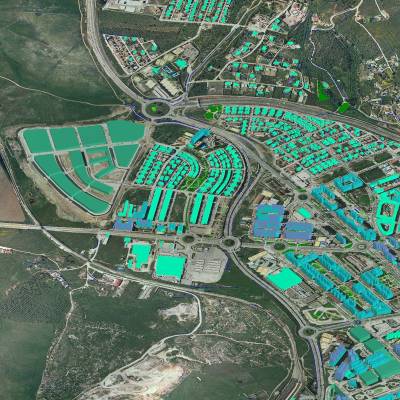
Prepare for a career in the innovative field of Geographical Information Systems (GIS). Build your skills in this essential area of the world’s information infrastructure.
View MSc Geographical Information SystemsCareers
Whether you’re looking to enter the water sector, broaden your environmental expertise, or prepare for increased responsibility in your current role, this course is designed to support your career development.
In-demand skills for the sector
You’ll gain experience in:
- assessing water availability and demand
- developing and evaluating hydrological models
- analysing climate and drought scenarios
- supporting catchment-management planning
- evaluating reservoir and water-allocation strategies
- communicating technical findings to different audiences
- contributing to multidisciplinary decision-making processes.
These capabilities are increasingly valued in organisations responsible for balancing water security, environmental protection, and sustainable development.
Potential career paths
This course will prepare you to step confidently into entry-level and early-career roles in:
- water resources management
- hydrology
- catchment management
- environmental consultancy
- water utilities
- environmental policy and regulation
- climate adaptation
- sustainability
- civil and environmental engineering
- public-sector water planning
- water-sector consultancy
- research and technical support within government agencies, utilities, NGOs, and international development organisations.
Enhancing existing careers
This course is valuable for professionals already working in related roles who want to strengthen their technical understanding of water-resource systems and demonstrate specialist knowledge of IWRM.
The practical focus on analysing data, evaluating management options, and assessing competing water demands helps you develop skills that can be applied immediately in professional settings.
Further study paths
The course also provides a useful foundation for further study, including doctoral study, in hydrology, water resources engineering, environmental management, water governance, climate adaptation, catchment science and related fields.

Free career support
Access our free careers service while you study.
- 1:1 appointments
- CV checks
- Interview prep
- Job opportunities
Entry requirements
Entry requirements
We welcome students from all over the world.
This course has no formal entry requirements. You do not need to provide proof of your qualifications.
But you do need to check the entry guidance above to understand the level of teaching delivered, to decide if this course is right for you.
If you do not have qualifications from the UK, check the equivalent teaching level for your country.
Visa requirements
You do not need a student visa to study online with us.
English language requirements
Teaching is delivered in English.
You do not have to provide proof of your English language skills to join this course. But we want to make sure that you can use English well enough to study successfully.
Recommended level of English
For this course, we recommend the following level of English language proficiency.
These are our Postgraduate Standard requirements, and these are minimum scores.
IELTS Academic, IELTS UKVI Academic, or IELTS Online (not IELTS Indicator or IELTS General Training)
- 6.5 overall
- 5.5 for listening, reading and speaking
- 6.0 for writing
TOEFL iBT or TOEFL iBT Home Edition
- 90 overall
- 17 for listening
- 18 for reading
- 20 for speaking
- 21 for writing
- TOEFL DI code is 0818
Cambridge English: B2 First, C1 Advanced, or C2 Proficiency
- 176 overall
- 162 for listening, reading and speaking
- 169 for writing
LanguageCert Academic / LanguageCert Academic SELT
- 70 overall
- 60 for listening, reading and speaking
- 65 for writing
Oxford ELLT Digital – English Language Level Test Online
- 7.0 overall
- 5.0 for listening, reading and speaking
- 6.0 for writing
PTE Academic (online test not accepted)
- 62 overall
- 59 for listening, reading, speaking and writing
Skills for English: SELT
- B2 pass with merit
Duolingo – tests taken from 1 July 2024 onward
- 120 overall
- 95 for listening, reading and speaking
- 105 for writing
University of Aberdeen English Pre-sessional Programme (PSE)
- Pass
- Valid for one year. Refresher can be offered if out of date
Pre-sessional academic English preparation programmes undertaken at other UK universities
- Pass at an equivalent of 6.5 (C1)
- B2 in all four skills
- Certification must be within one year prior to the start of your course
For full information about language requirements, see our English Language Requirements page.
You will need access to:
A computer (PC, laptop or Mac) with an up-to-date operating system
Most teaching materials are smartphone- and tablet-friendly. But we recommend a proper laptop or desktop for completing assignments comfortably.
Reliable internet access
We recommend:
- a wired connection
- a minimum download speed of 2 Mbps so you can take part fully in live sessions.
Speakers or headphones
- We recommend a headset with built-in microphone and earphones if you’re likely to study in an environment with background noise.
- A webcam is optional, but you may like to use one for some interactive sessions.
Software
We’ll give you access to Microsoft 365 applications. This means you can use online versions of Microsoft Word, Excel, PowerPoint, and OneDrive and install these programs on up to five personal devices.
If your course requires specialist software, we’ll provide you with access to this and a licence that lasts throughout your studies.
See our detailed IT requirements for more information.
Fee payment
Your course fee needs to be paid in full before you start your course.
We accept payment via Visa Debit, Visa Credit and Mastercard.
Ways to save
You may be able to get help funding this course via:
- discounts – if any discounts are available for this course, they’ll appear in the section below
- employer sponsorship – we accept full and partial fee payments from sponsors.
Find out more about funding options.
Student card
All our students are entitled to a University of Aberdeen student card. This gives you access to a range of student discounts around the city and online.
Optional book purchases
Access to all the essential books and resources you need are included in your tuition fee. They’ll be made available to you online and you do not have to buy your own copies.
We also provide optional recommended reading lists. Many of these resources are available electronically through our library, although purchases may be required if you wish to read the full list.
Printing
You may want to set aside a small budget for printing, depending on how you like to work.
This course has no formal entry requirements. You decide if it’s suitable for you.
The course is delivered at Masters level. At this level, for this course, you’d usually have at least:
- a 2:2 UK honours degree (or equivalent), or
- relevant experience that supports this level of study.
Your right to cancel starts on the date of payment of the tuition fees for this course and expires 15 days after the start date of this course.
The University of Aberdeen is not responsible for resolving any issues concerning software, hardware, or internet, in relation to your personal computer and this course.
Please read our full terms and conditions.